

The Top 10 Tips For Testing Equipment For PAT in Burntwood
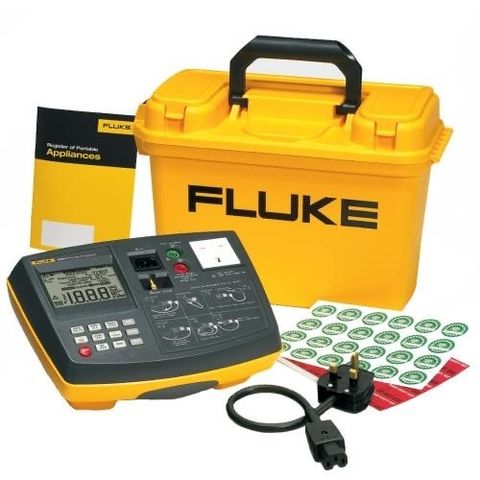
The United Kingdom's Portable Appliance Testing Programme (PAT) is built on the the proper selection, maintenance, and use of test equipment. It is crucial to remember that the technical competence of a technician is crucial but the instruments used for testing' calibration, quality, and application are also crucial. Testing equipment used for electrical testing must meet the requirements of the IET Code of Practice for in-service inspection and testing of electrical equipment, the industry standard for good practices. From advanced portable appliance testers to basic voltage indicators, every tool plays an essential role in verifying the safety of electrical equipment. Understanding the capabilities and limitations of the equipment, as well as the legal requirements, is crucial for those who want to make sure their testing program is safe and legally defensible.
1. Portable Appliance Tester Itself in Burntwood
It is a fundamental device that is an automated safety test instrument. Modern testers vary from basic models that perform earth continuity, insulation resistance and lead polarity tests, to more advanced models that offer additional tests, such as run/load as well as earth leakage and the current of contact. The ability of a tester to conduct a "soft test" (or alternative leakage tests) on electronics that are delicate (e.g. printer, computer) which could be damaged by the voltage high required in a standard resistance test. The test instrument chosen should be compatible with the complexity and size of the appliance being examined.
2. Mandatory annual calibration by a UKAS accredited laboratory in Burntwood
This is a condition that is not negated in conformity. The United Kingdom Accreditation Service, or UKAS, must certify that the PAT tester has been calibrated on a regular basis at least once per year, by reputable laboratories. The calibration confirms that the test results are accurate and able to be traced against national standards. The service provider must have a valid calibration certificate for each tester they use. If a test result is invalidated by an instrument out of calibration or not calibrated will be the outcome if an accident occurs.
3. User Checks and Functionality Verification (Daily/Pre-Use)
Beyond the annual calibration, the technician must perform a daily functional check which is often referred to as"user check, "user test" or "verification test" prior to beginning testing. The test is carried out using a well-known "proof load" or set of leads, or other known reliable product. If the tester fails to give the expected result it is a sign that the tester is faulty. It shouldn't be utilized again until it has been serviced and recalibrated. This simple check is an important procedure to ensure that the test equipment is operating properly on the day of usage.
4. The vital role of the visual Inspection Equipment in Burntwood
Although often overlooked Tools that permit an accurate visual inspection are just as crucial as an electronic tester. Included are tools for dismantling appliances and sockets, determining fuse ratings, label printers or preprinted labels, and an inspection torch to inspect areas that are dark. The visual examination is where the majority of the faults are discovered. If you skip this stage, it will undermine your entire test process.
5. Specialised Test Leads and Adapters in Burntwood
A skilled technician will have an array of adaptors that work with all kinds of appliances outlets. There are adaptors to connect to detachable leads and then test them, and adaptors to check the plug's end. Failure to connect properly can result in tests not being done or being skipped.
6. Earth Bond Test Led and its importance for Class I Equipment
The bond to the earth is a vital test for the Class I Appliances (those needing an earth to guarantee safety). The test lead requires a very high current capacity (typically 5-25 A) to ensure that a secure connection to the earth circuit is confirmed. A lead that is not of high quality or not suitable for the test may result in a false "pass" result. This could pose an unintentional safety risk. It is essential that test technicians use the correct lead to conduct the test.
7. Insulation Resistance Testing and Voltage Parameters
The test for insulation resistance applies the use of a very high DC voltage (typically 500V for the majority of appliances) between earth and live conductors in order to test the quality of the insulation. The technician should know how to conduct this test and how to avoid it (e.g., on equipment with electronic components that are sensitive or surge protectors, where a substitute leakage test is more secure). The equipment must deliver the correct test voltage specified in the IET code of practice.
8. Presets, Pass/Fail Criteria, and Instruments in Burntwood
Reputable PAT testers have built-in pass/fail criteria that are based on the limits set out in the IET Code of Practice (e.g. earth bond resistance <0.1O + R, insulation resistance >1MO). Transparency is achieved by ensuring that the technician is aware of these preset limits. They should not alter them arbitrarily in an attempt to achieve the desired result. The service provider must be able confirm that their equipment has been set according to industry-standard thresholds, ensuring consistent and justified outcomes.
9. Data Management and Reporting Features in Burntwood
The latest PAT testers are also data loggers. They can store hundreds or thousands of test data, which can be then downloaded to software to generate certificates, asset registers, and failure reports. Transparent providers use this capability to provide clear, precise documents of the work they have done. Manual paper-based recordings are vulnerable to errors, loss, and falsification and is not a representative of the best practices in the industry.
10. Secondary Verification Equipment Voltage Indicators and GS38 in Burntwood
A competent technician will use PAT tests as their primary instrument, but they additionally carry another voltage indicator or voltstick, to verify that electrical connections are safe prior to touching them, in particular when replacing plugs or examining faults. The HSE Guidance Note, GS38, lists the requirements for design for fingers guards, insulated electrodes and appropriate current fuses. This adds an additional layer of safety for the person conducting the test. Have a look at the most popular Burntwood fixed electrical testing for website recommendations including fire extinguisher service birmingham, electrical fire, fire extinguisher service birmingham, fire extinguisher in electrical fire, fire extinguisher fire extinguisher, all about fire extinguisher, fire extinguisher service near me, electrical fire, fire extinguisher for an electrical fire, testing a fire extinguisher and more..
Top 10 Tips On Cost Transparency In Relation To Fire Extinguisher Repairs in Burntwood
Cost transparency is more concerned with regulatory compliance and risk management than price comparison. The UK regulatory framework governed strictly by the Regulatory Reform Order, 2005 could result in unexpected risks and severe violations. Transparent quotes provide a detailed outline of the kind of services you'll receive. They show the provider’s adherence British Standards, their operating methodology, and the commitment to ethical business practices. Hidden fees and unclear replacement policies, along with vague line items in quotations, are not just financial worries. They also indicate an underlying risk to the quality of service. True cost transparency allows you to make informed choices which balance budgetary requirements with the non-negotiable legal requirements of the fire safety law. This can prevent unpleasant surprises or a violation of insurance.
1. Breakdown of Costs for Service Visits: Labor, Consumables and Parts in Burntwood
A clear and transparent estimate will break down the costs of every service. An estimate for an annual service should separate out the labour costs of the engineer (his time on site) and the parts that need to be replaced (e.g. new seals and labels) and the consumables. This will demonstrate the service's commitment to high-quality by not reusing older units or reusing outdated sealings. This allows for honest comparisons between providers since one price could exclude these crucial elements and may be inaccurate.
2. Pricing Model Clarity: All-Inclusive vs. Pay-As-You-Go
The contract must specifically specify the pricing model utilized. A fixed-price contract (or all-inclusive) includes a cost per year, which includes parts, labour and refills. The contract should not contain additional charges hidden in the contract. In contrast, a Time-and-Materials model or Pay-As-You-Go model will offer a lower annual service charge, but may be liable to substantial additional fees for extended services when they fall due. Transparency here is vital to avoid budget shocks several years into a contract and to determine what the financial risk (for expensive overhauls) truly lies.
3. Costs for extended service (5 & 10-year).
The biggest cost shocks come when extended services are due. A transparent service provider does not conceal these future costs. A transparent company does not conceal these future costs. They'll give you a complete price list or schedule in the quote that project the cost of a 5-year extension service (for powder, foam and water) and a 10-year overhaul (for CO2) dependent on the type of extinguisher. Then, you can budget appropriately for the duration of the contract and calculate the long-term benefits of a package that covers everything instead of paying as you go.
4. Equipment Replacement Policy in Burntwood
Transparency is essential in this regard. The quote should contain the provider's policies and costs associated with replacing extinguishers beyond economic repair (BER). This can include scenarios like damage or corrosion that is significant. Are they able to provide a replacement that is similar? What is the cost? Does the provider offer a discount for returning an old unit? In the absence of specific information, it's possible that your service provider may use equipment condemnation in order to charge you unexpectedly high costs for replacement.
5. Other and hidden fees Additional and hidden fees: Call Out, Mileage, Admin in Burntwood
Scrutinise the quote's small print for any additional fees. A reputable business will mention them prior to the time of purchase. Key fees to identify include: Mileage charges (beyond a certain distance) emergency call-out fees (and their cost during non-business hours) Administration fees (for processing paperwork or certificates) and parking/congestion costs (particularly relevant for city-centre Burntwoods). If a price appears too low, it may have been due to the fact that the cost is not included.
6. Quotation Validity Period and Price Guarantee Conditions in Burntwood
A professional quote will include an explicit validity period (typically 30-90 days) which will protect the client from price hikes after you've decided to sign. A professional quote should include the conditions and terms of any price guarantee particularly for contracts with a long term. Will the annual fee be fixed for the duration of the contract? Will it rise annually in line with an established index, such as the CPI or the CPI-U? Or will it be reviewed annually by the service provider at their discretion? Transparent terms avoid disagreements and provide certainty in the budget.
7. Different Pricing for Extinguishers based on the size and type in Burntwood
Prices for servicing vary widely based on the size and type. A transparent price is not a blanket price. It will provide prices per unit, separating between the 9-litre water extinguisher the CO2 extinguisher that weighs 2kg and a 6-litre wet chemical unit, as an instance. This will provide a complete and precise evaluation of your particular inventory and the actual amount of work needed.
8. The fees for Documentation and Certificates in Burntwood
Legal certificates are not an additional document. To include the cost of preparing the certificate, issuing it and maintaining this essential document within the service fee the document must be listed. Transparent quotes do not include this line item as a fee or charge it on the final invoice. If a supplier requires proof to prove that the work was carried out in accordance with the contract, that is a clear sign of bad practice.
9. Payment Terms and Schedule in Burntwood
Clear payment terms that are both clear and fair are the hallmark of a reputable provider. Quotes must include information like the time frame of the invoice (e.g. quarterly, annually), the accepted payment methods as well as the net terms (e.g. 30 days after the date of the invoice). Payment must be made prior to or at conclusion of the service. It is best to avoid companies that require full payment prior to the service is even completed.
10. Comparison Framework for Evaluating Competitive Quotes in Burntwood
True transparency allows you to evaluate the same item with the same. Uncertain quotes make this impossible. It is essential that the service provider offer a thorough and detailed breakdown that lets you compare the cost for servicing a 2-kg CO2 Extinguisher from Company A against Company B. This includes the cost for the annual maintenance, the anticipated cost of its 10-year testing as well as the replacement cost should it be deemed ineffective. If you don't include this information, you'll be comparing apples with oranges. The lowest quote may end up costing the most in the end, compromising security and compliance. Follow the top Burntwood fire extinguisher checks for site tips including electrical extinguisher, fire extinguisher service near me, fire extinguisher using, testing a fire extinguisher, extinguisher service, fire electrical extinguisher, fire extinguisher for an electrical fire, fire service, extinguisher service, fire extinguisher extinguisher and more. More broadly, check out the best fire extinguisher inspection for more.

